
I picked up extra hours for six straight weeks — nights, weekends, whatever I could fit in. By the end of it, I’d made real money. And by the end of the month, my checking account looked exactly the same as it did before I started. Not worse. Just… the same. Like the extra effort had evaporated somewhere between “earned” and “saved,” and I never actually saw it happen.
It turns out I wasn’t the only one confused by this. It has a name, and it hits side hustlers in a specific, predictable way.
Why do I have no extra money even with a side hustle?
Side hustle lifestyle inflation happens when extra income quietly funds extra spending instead of extra savings — often justified as a reward for the added hours worked. More than a third of side hustlers report spending their extra income right away. The fix is assigning a destination to that money before the extra hours are even worked, not after.
Quick takeaways before you dig into why
- Lifestyle inflation isn’t unique to raises — it happens just as easily with side hustle income, often faster.
- Over a third of people with a side hustle spend the extra income immediately instead of saving any of it.
- Extra hours worked create a psychological “I earned this” permission that regular income doesn’t trigger the same way.
- The fix isn’t stricter willpower — it’s deciding where the money goes before you even start the extra shift.
Lifestyle inflation, but for side hustles specifically
Most explanations of lifestyle inflation focus on raises and promotions: you earn more at your main job, so your spending quietly creeps up to match. Side hustle income creates the same trap through a different door. The money didn’t come from a promotion — it came from hours you physically gave up, on top of everything else. That distinction matters, because it makes the spending feel earned in a way that’s harder to question. “I worked for this” becomes its own justification, even when the goal was never just to have spending money in the first place.
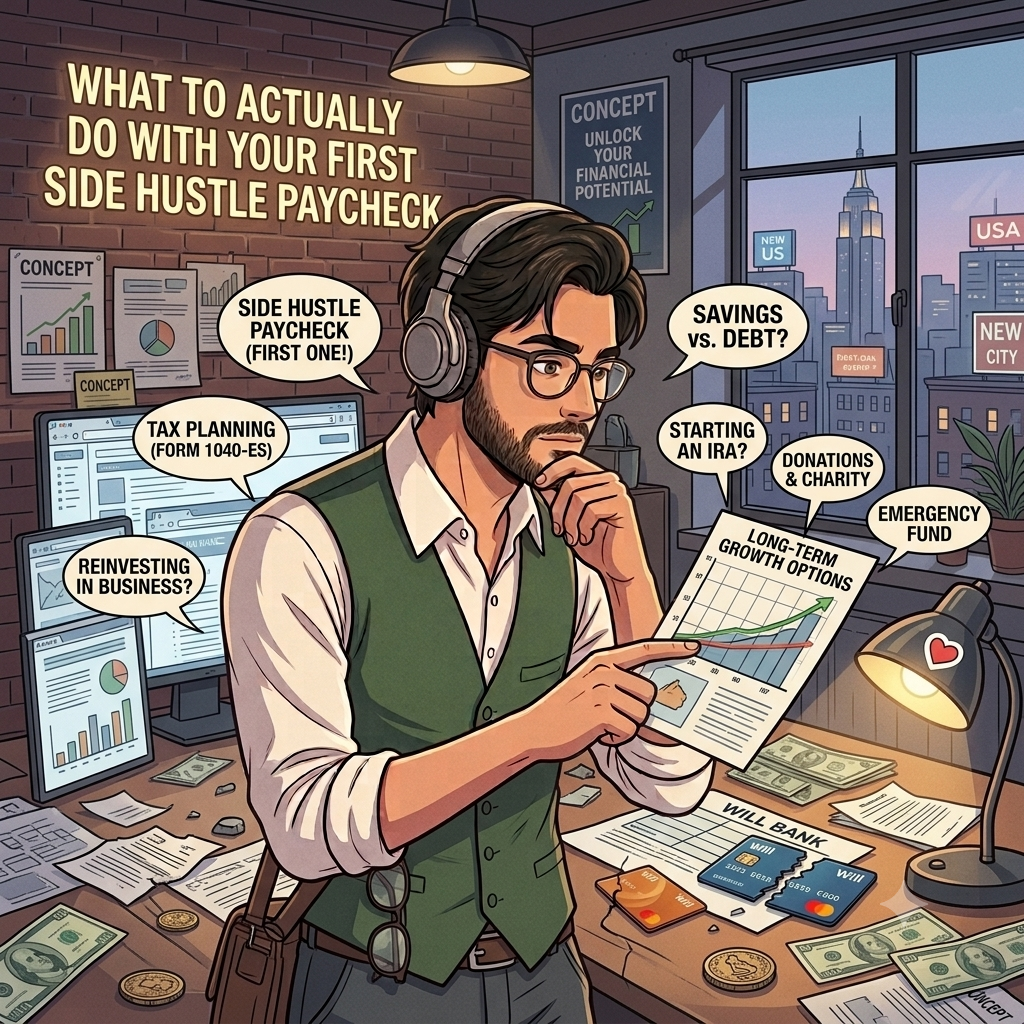
This connects directly to the mental accounting pattern from what to actually do with your first side hustle paycheck: money that arrives without bills already attached to it gets treated as bonus money, spent more freely than a regular paycheck. Lifestyle inflation is just that same pattern playing out slowly, purchase by purchase, instead of all at once.
The number behind this: 1 in 3 side hustlers spend it immediately
More than one in three Americans with a side hustle report spending that extra income right away, according to a Bankrate survey — and financial experts flag this as the wrong approach for anyone trying to build actual financial progress from the extra work. It’s worth sitting with that number for a second: this isn’t a small minority making an obvious mistake. It’s the majority pattern, which means if it’s happening to you, you’re not failing at something everyone else figured out — you’re experiencing the default outcome of not deciding otherwise in advance.
The burnout connection nobody mentions
There’s a specific trigger that makes side hustle lifestyle inflation worse than the regular kind: exhaustion. Working a second job on top of a first one is genuinely tiring, and tired brains reach for reward faster than rested ones. A rough week of double shifts makes “I deserve this” feel less like rationalization and more like simple fairness — even when the purchase has nothing to do with why the side hustle started in the first place.
This isn’t a character flaw. It’s a predictable response to depleted willpower, and the fix isn’t gritting your teeth harder through the tiredness. It’s removing the decision from the moment you’re most tired to make it well.
Where the pattern actually breaks
| What most people do | What actually breaks the pattern |
|---|---|
| Decide what to do with the money after it arrives, when you’re tired and it feels earned | Decide the destination before the extra shift even starts, when you’re thinking clearly |
| Let side hustle income sit in the same account as regular spending money | Route it automatically into a separate account the same day it clears |
| Treat every side hustle dollar as available for a “reward” | Pre-decide a small, fixed reward amount, with the rest already spoken for |
If part of that destination is taxes, this is also where the side hustle tax surprise connects back in — the money that quietly disappears into spending is often the same money you’ll need come quarterly payment time.
Frequently asked questions
Is it ever okay to spend side hustle money on something fun?
Yes — the goal isn’t zero enjoyment, it’s a fixed, pre-decided amount for enjoyment instead of an open-ended “whatever’s left.” A plan with no reward built in tends to get abandoned faster than one with a small, guilt-free allowance.
How do I know if I’m experiencing lifestyle inflation from my side hustle?
The clearest sign: your side hustle income has gone up over time, but your savings balance hasn’t moved with it. If the extra earning and extra saving aren’t tracking together, the money is very likely funding lifestyle creep instead.
Should I just quit the side hustle if this keeps happening?
Not necessarily — the issue is usually the missing system, not the side hustle itself. Fixing where the money goes before it arrives typically solves the problem without giving up the extra income entirely.
If the exhaustion behind this pattern feels like more than just a spending problem, it might be worth stepping back and asking how to know if your side hustle is actually worth your time in the first place — not every side hustle is worth keeping, and that’s a fair question to ask honestly.
The extra hours were real. Make sure the extra money is too — not spent before you even noticed it arrived.