
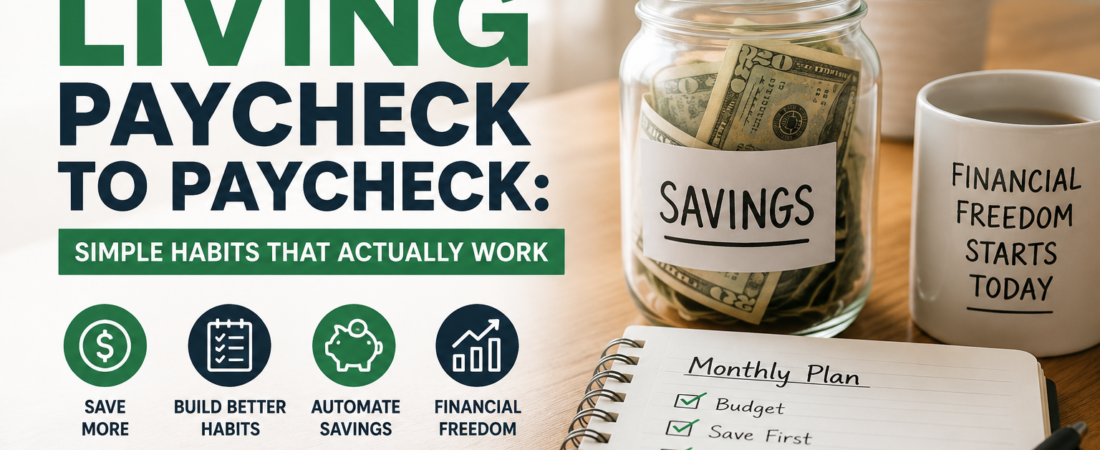
If you feel like your money disappears as soon as it hits your account, you’re not alone. Millions of Americans are stuck living paycheck to paycheck, with little to no savings.
The good news? You don’t need a huge salary to break this cycle. What you really need are simple habits that actually work in real life.
In this guide, you’ll learn how to stop living paycheck to paycheck using practical steps, small changes, and smarter money habits.
Why You’re Stuck Living Paycheck to Paycheck
Before fixing the problem, you need to understand why it’s happening.
For most people, it’s not just about income. It’s about behavior, habits, and how money decisions are made daily.
Common reasons include:
- No clear budget or spending plan
- Impulse spending and emotional purchases
- Not saving consistently
- Relying too much on credit cards
If this sounds familiar, don’t worry. You can change it.
If you want a deeper breakdown of the cycle, check this guide: how to stop living paycheck to paycheck.
Simple Habit #1: Pay Yourself First
One of the most powerful habits is saving money before you spend anything else.
Instead of waiting to see what’s left at the end of the month, flip the order.
How to do it:
- Set a small amount (even $10–$50)
- Move it to savings as soon as your paycheck arrives
- Treat it like a non-negotiable bill
This simple shift builds consistency over time.
Simple Habit #2: Automate Your Savings
If saving feels hard, automation can fix that.
Automation removes the need for willpower. You don’t have to think about saving — it just happens.
Easy ways to automate:
- Set up automatic transfers to a savings account
- Use apps that round up purchases
- Split your paycheck between accounts
Many banks in the U.S. offer free automation tools, making this one of the easiest wins.
Simple Habit #3: Control Small Daily Spending
Most people think big expenses are the problem. But small daily spending is what quietly drains your money.
Coffee, food delivery, subscriptions — they add up fast.
What to do:
- Track your spending for 7 days
- Identify “invisible” expenses
- Cut or reduce at least 1–2 categories
You don’t need to cut everything. Just be intentional.
Simple Habit #4: Fix Your Money Mindset
If you believe “I’ll always be broke,” your actions will follow that belief.
This is why mindset matters.
Many people know what to do, but still don’t do it. If that sounds like you, this article explains why: why knowing isn’t enough to save money.
Simple mindset shifts:
- Focus on progress, not perfection
- Accept that change takes time
- Stop comparing your finances to others
Your habits improve when your thinking improves.
Simple Habit #5: Build a Basic Emergency Fund
Without savings, every unexpected expense becomes a crisis.
This is why an emergency fund is essential.
Start small:
- Aim for your first $500
- Then grow to $1,000
- Eventually reach 3–6 months of expenses
This gives you breathing room and reduces stress.
Simple Habit #6: Use Accountability
Changing money habits alone can be hard.
Accountability helps you stay consistent.
Options include:
- A friend or partner with similar goals
- Budgeting apps
- Online communities focused on saving money
When someone else is involved, you’re more likely to stick with your plan.
How to Measure Progress (Even If You’re Not Rich Yet)
Progress is not just about your bank balance.
Look for these signs:
- You save money more consistently
- You spend more intentionally
- You feel less stressed about money
- You rely less on credit cards
These are real wins — even before your savings grow significantly.
Final Thoughts
Learning how to stop living paycheck to paycheck is not about being perfect. It’s about making small, consistent changes that improve your financial life over time.
Start with one habit. Keep it simple. Stay consistent.
Over time, these small actions will break the cycle — and give you more control over your money.